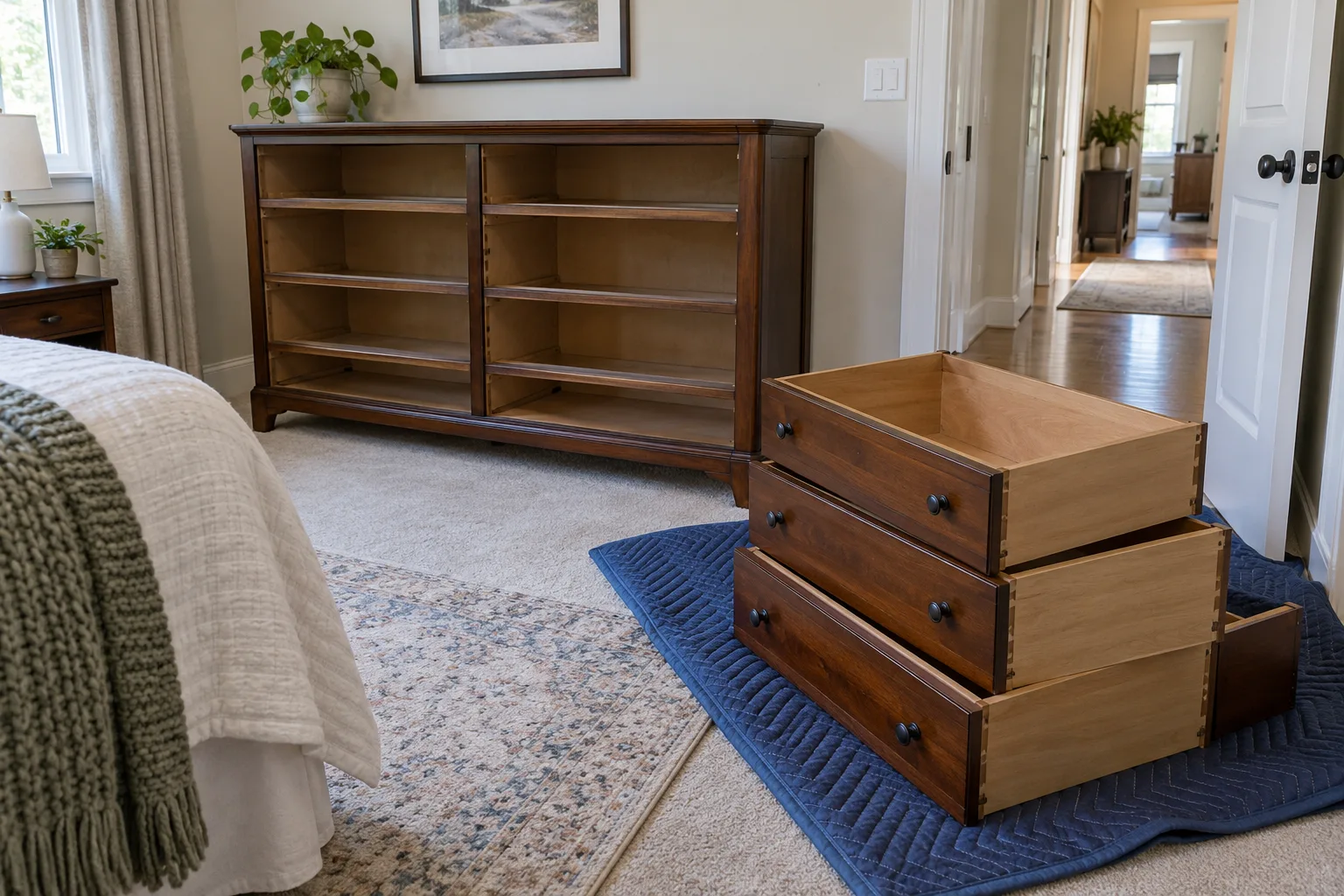
An empty dresser is safer to plan around, but drawer removal, mirrors, stairs, and tight hall turns still need attention. The goal is to give the removal team enough information to plan the load and the route without asking you to guess at pricing or handling.
1. Empty every compartment
Check all drawers, hidden jewelry trays, cabinets, and spaces behind removable shelves. Set personal items in another room so they cannot be mixed with the pickup.
2. Measure the case
Record width, depth, and height with mirrors or toppers removed when they detach. Compare those measurements with door openings and the narrowest hallway turn.
3. Secure or remove drawers
Drawers may be removed to reduce weight or secured so they do not slide. Photograph unusual stops, damaged runners, or drawers that cannot be opened.
4. Call out stairs and mirrors
A stair turn or attached mirror can change the handling plan. Share full-route photos and do not balance loose mirrors on top of the dresser for pickup.
Quick handoff checklist
| Detail | What to send |
|---|---|
| Furniture | Full photos, count, dimensions, material, and condition |
| Route | Floor, stairs, elevator, narrow turns, and door widths |
| Loading | Parking location, carry distance, gate, dock, or building rules |
| Timing | Preferred dates and any hard access window |
For the service scope, see Dresser Removal. When your photos and route details are ready, use the estimate checklist.