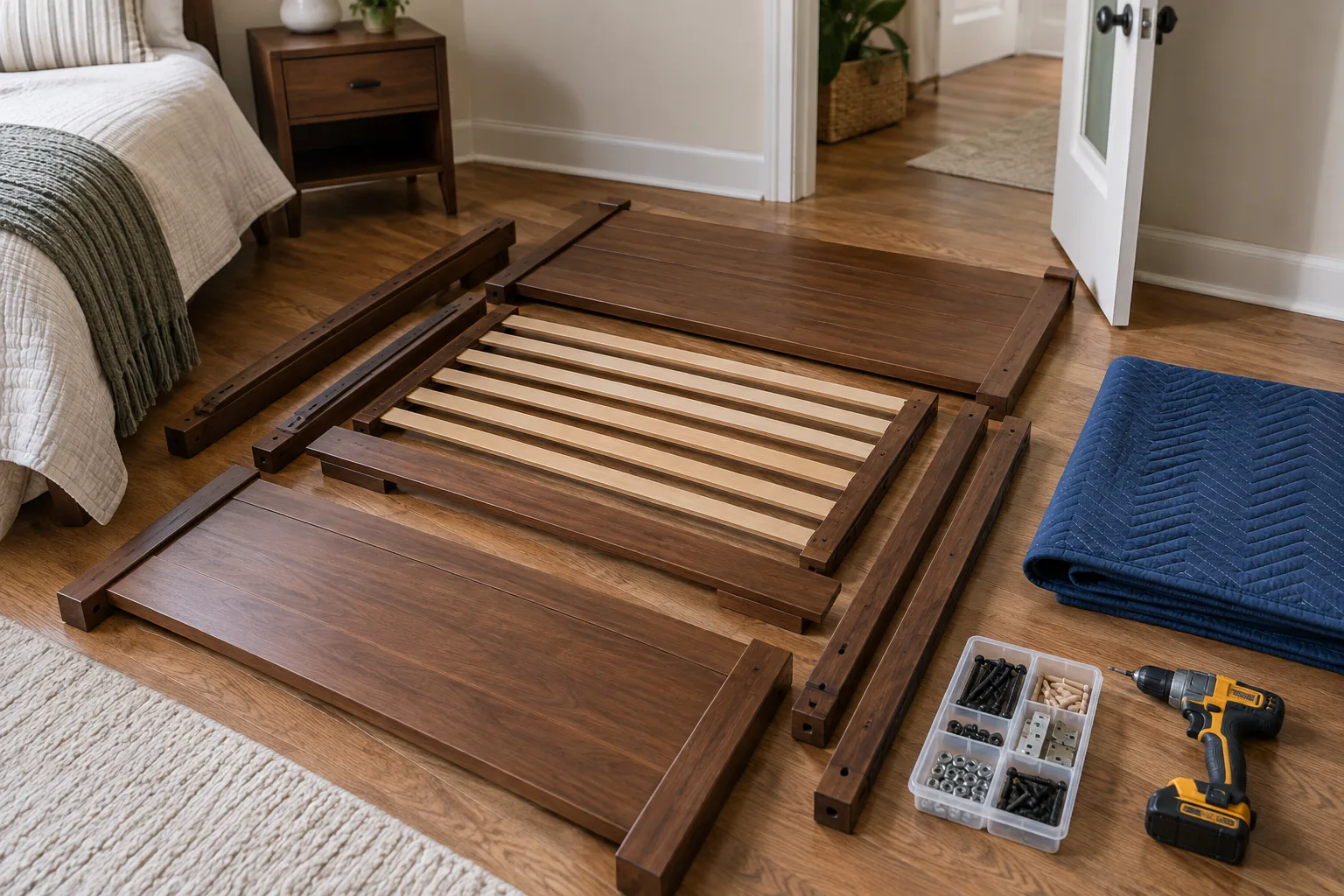
Strip the bedding and identify how the frame joins. Whether you disassemble it yourself depends on the hardware, damage, and access. The goal is to give the removal team enough information to plan the load and the route without asking you to guess at pricing or handling.
1. Identify the frame type
Platform beds, metal rails, storage beds, and upholstered frames come apart differently. Photograph the corners, center supports, drawers, and any visible fasteners before moving parts.
2. Keep hardware controlled
Use one labeled container for bolts, brackets, and connector pins if the frame is being separated. Loose hardware on a floor or in bedding creates a trip and puncture risk.
3. Stop when a joint is damaged
A bent bracket, stripped screw, cracked rail, or swollen wood can make a normal separation unpredictable. Photograph the problem and explain it before the pickup.
4. Clear the bedroom route
Remove bedding, lamps, rugs, and small furniture from the carry path. Confirm stair width, tight corners, and whether a headboard can stand upright through the doorway.
Quick handoff checklist
| Detail | What to send |
|---|---|
| Furniture | Full photos, count, dimensions, material, and condition |
| Route | Floor, stairs, elevator, narrow turns, and door widths |
| Loading | Parking location, carry distance, gate, dock, or building rules |
| Timing | Preferred dates and any hard access window |
For the service scope, see Bed & Bed Frame Removal. When your photos and route details are ready, use the estimate checklist.